


When France’s U-20 women’s team faced Ghana during their Group C clash at the FIFA U-20 Women's World Cup in Poland the game was delicately poised at 1–0 early in the second half.
Clara Bertrand had broken the deadlock at Arena Sosnowiec, but it was a bizarre, mesmerising routine in the 69th minute that captured the global footballing imagination and blew open a tight contest.
Dubbed la ronde by coach Philippe Joly, the set-piece instantly went viral across digital platforms and sports broadcasts.
Five French attackers abandoned traditional static positioning inside the penalty box, clustered tightly near the penalty spot, and began spinning rapidly in a synchronized clockwise rotation, replicating a game of children playing a game of ring around the roses.
When Ornella Graziani struck the corner delivery, the girls suddenly fractured the approach, before attacking different directions within the box, paralysed Ghana’s defensive structure in the process.
This eventually left Justine Rouquet completely unmarked to volley home for 2–0 on the way to a comprehensive 4–0 victory.
As the game continues evolving, set-pieces have become an approach used to gain “margins”. What does the latest bizarre, yet effective move by France mean for the future of set-piece routines?
Read More: Explained: Why VAR Allowed Haaland’s Offside Goal For Man City Against Man United to Stand
The Set-Piece Arms Race: From Italy 2021 to Mikel Arteta
Set-pieces are now meticulously engineered micro-tactics designed to unlock stubborn blocks. This modern obsession has a well-documented lineage across the European game.
At Euro 2020 (played in 2021), Roberto Mancini’s victorious Italy side demonstrated a masterclass in dead-ball manipulation, utilizing intricate blocking, screens, and decoy runs inside the penalty box to manufacture free headers for central defenders.
Set piece coach Gianni Vio had a handbook of over 4,830 set-piece routines for both offensive and defensive situations, which he applied onto the side, and it proved effective.
Leonardo Bonucchi’s equalising goal against England in the final of Euro 2020 which enabled them to push the game to penalties and eventual victory was actually a set piece goal.
At club level, Mikel Arteta’s Arsenal has turned set-pieces into a ruthless science. Under the guidance of specialist Nicolas Jover, the Gunners transformed from open-play dependents into the most feared dead-ball side in Europe.
Arsenal's routines rely heavily on box crowding, aggressive goalkeeper obstruction, and micro-movements on the six-yard line to force defenders into split-second existential choices: track your man through a maze of bodies or hold your zonal line.
France’s la ronde is simply the logical evolution of setpieces, with their routine a blatant case of trying to cognitively confuse opponents in the box.
Inside La Ronde
To understand why France's carousel proved so devastating, we have to look past the visual novelty and examine the operational phases that make it work:
The Pre-Kick: In the build up to the goal, five attackers condensed near the edge of the box, forming a circle, which left Ghana's planned man-marking scheme puzzled with Grazianni raising his arm to signal readiness.
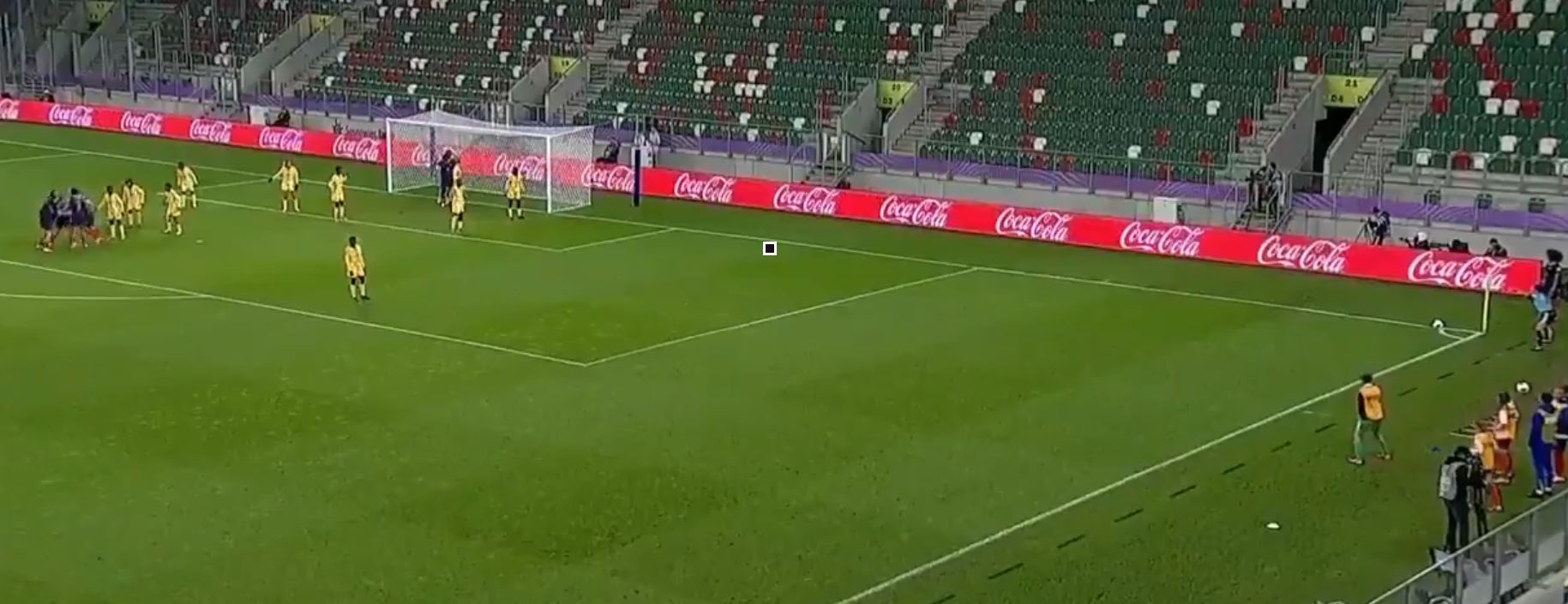
The Run-up: As Grazziani took her first two steps, the players (Juliane Denizot, Chiara Baylet, Clara Bertrand, Lina Gay and Kenza Rouche Dufor) wrapped their shoulders and started spinning rapidly.
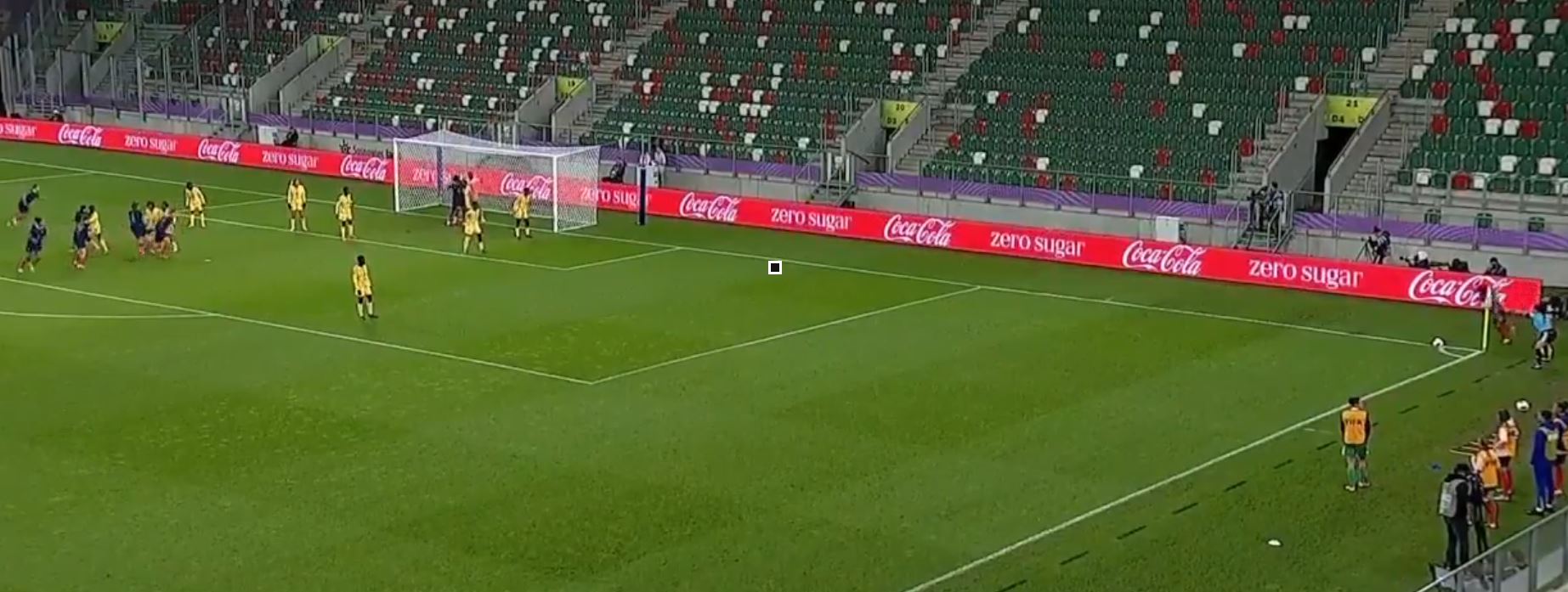
The Delivery: The moment the ball was struck, all five players broke the carousel, with Denizot accelerating into the near zone while the rest moved to the left side of the goal with Roquet -who was camped very deep - moving into the back post, leaving the static Ghana zonal markers caught off guard and tapping it home.
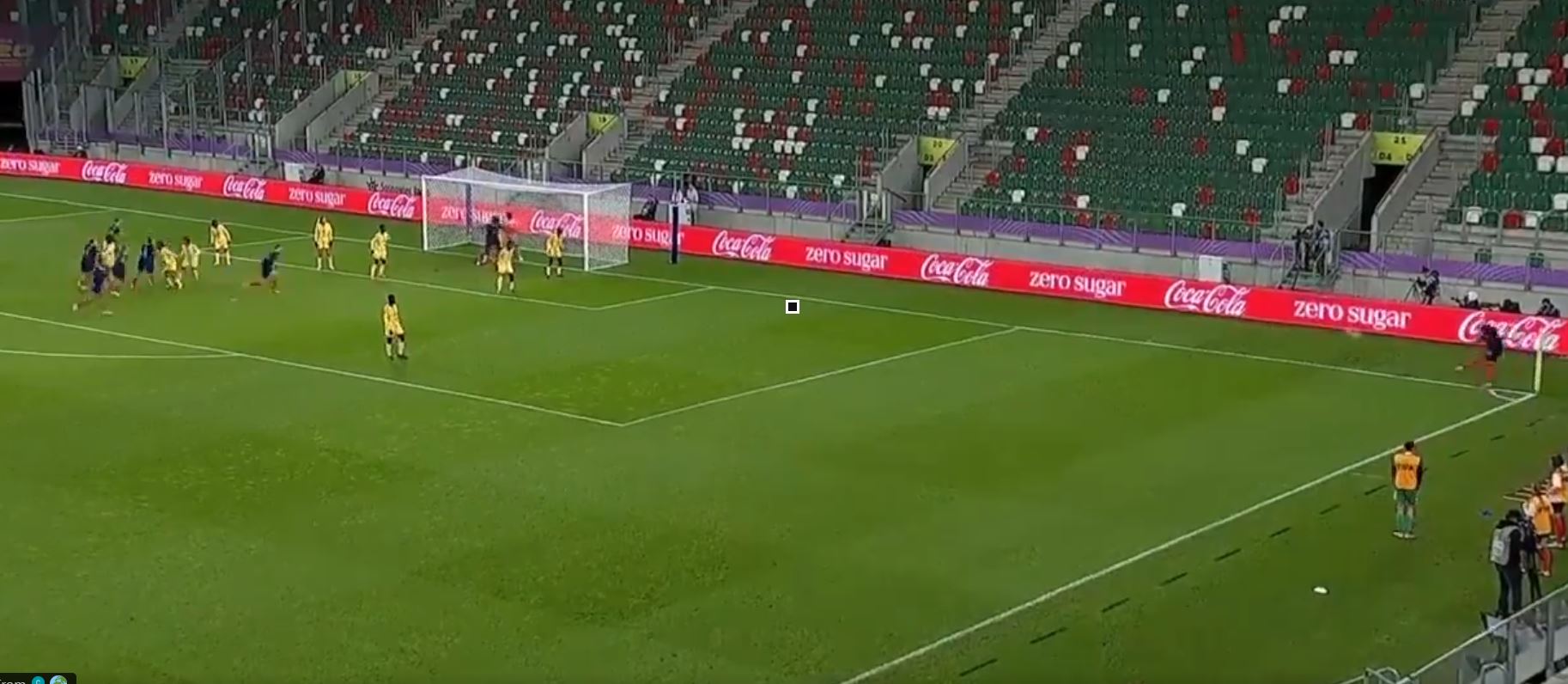
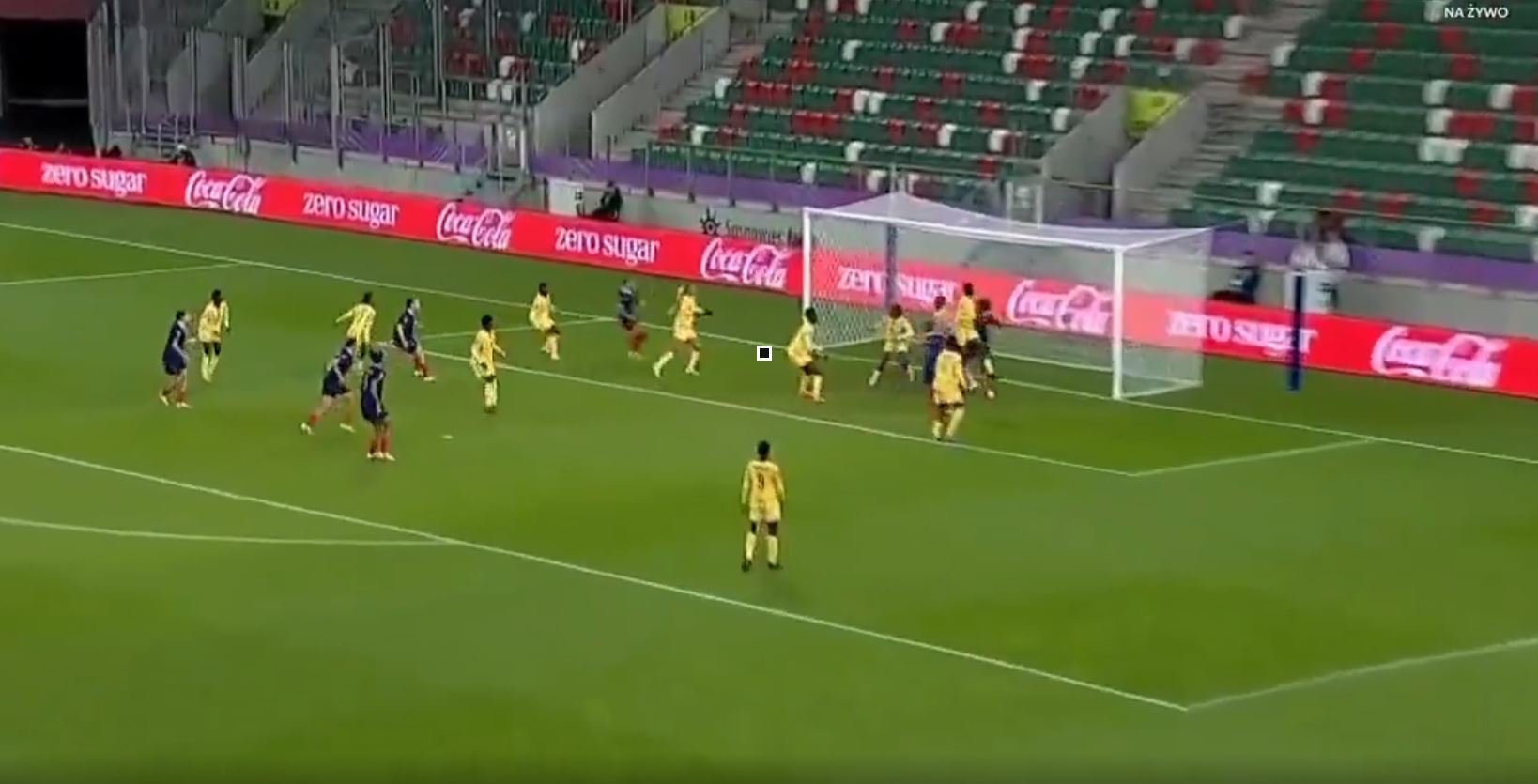
Why Frances Cognitive Overload Works:
Football defending relies heavily on predictive tracking, whether a team utilizes zonal, man-marking, or hybrid systems. France’s carousel exploits two distinct vulnerabilities in the human perceptual system:
Disrupting the opponent's vision: In a standard man-marking scheme, a defender assigns their gaze to a specific physical anchor—usually the opponent's torso and hips—to read their driving direction.
By spinning in a tight orbit, the French attackers constantly swapped physical depth and orientation. The defender’s brain was forced to repeatedly reset its visual anchor, triggering a fatal micro-delay in reaction time.
The failure of zonal handovers: When defending units attempt to pass players off zonally during such chaos, the speed of rotation causes severe cognitive friction.
Passing off an attacker requires clear communication and a fractional moment where spatial ownership shifts from Defender A to Defender B. The carousel forced multiple handovers to occur simultaneously, completely overloading Ghana's verbal and visual communication network.
Read More: FIFA U20 Women’s World Cup 2026: Top Scorers and Golden Boot Standings
How to Defend the Chaos
As unconventional set-pieces become increasingly weaponized in international tournaments, defensive coordinators are forced to adapt. Countering this requires teams to abandon traditional man-marking entirely during the pre-kick phase.
Implement a rigid zonal wall: Instead of tracking individual bodies within the carousel, defenders must guard fixed geometric zones along the six-yard box, treating the rotating circle as irrelevant noise until the ball is in flight.
Deploy the "enforcer" disruptor: Assigning some physical defenders to aggressively occupy the center of the spinning circle before it begins rotating can break the attackers' rhythm and prevent them from easily breaking off to the zones..
France's brilliant routine is definitive proof that the next frontier of football tactics is now psychological.
As margins continue to shrink at the highest level, the team that outthinks the opponent in the penalty box will hold advantage.


