
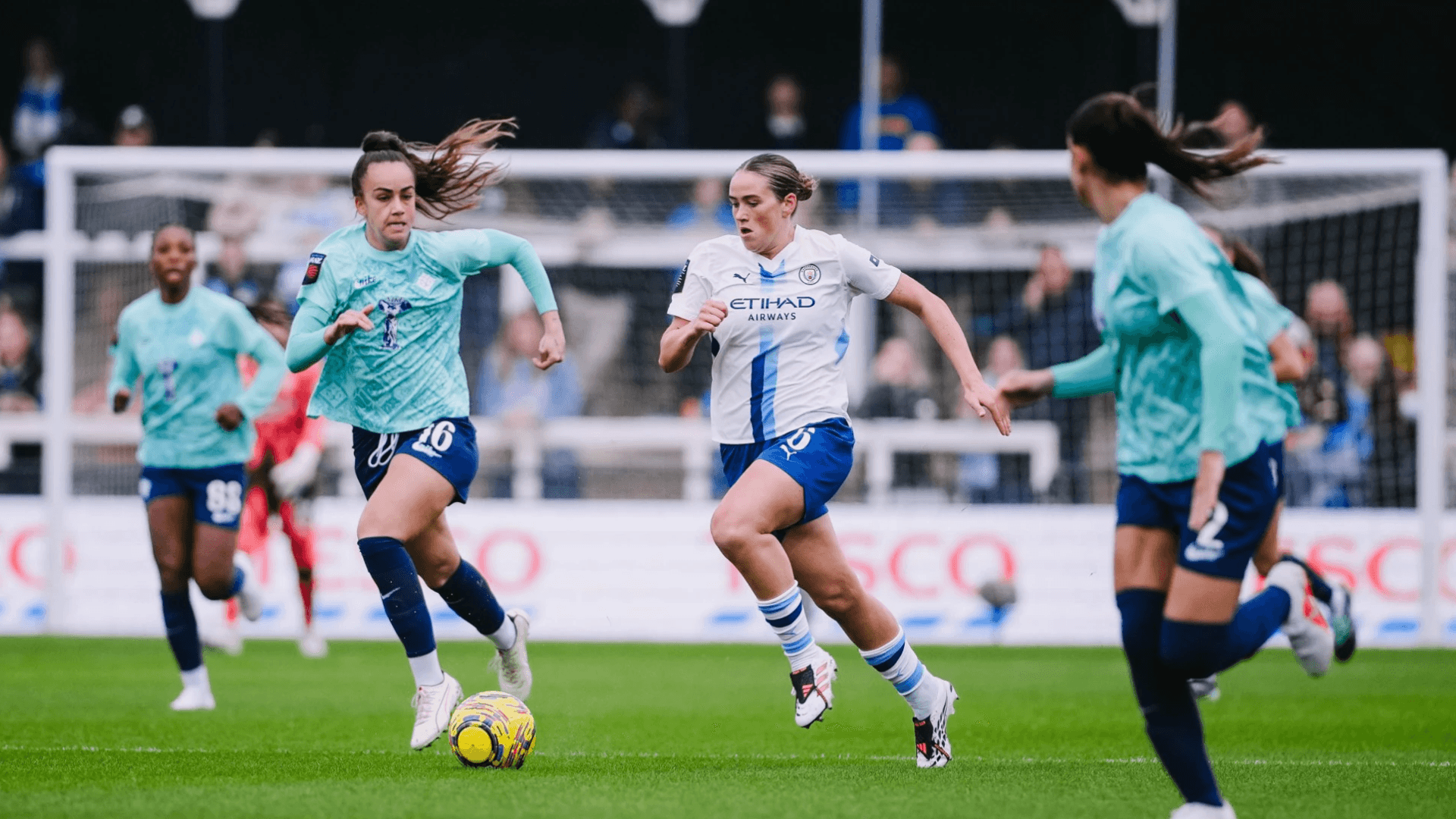
London City Lionesses may have fallen short against Manchester City, but their performance offered another indication of how quickly the ambitious club are closing the gap on the Women’s Super League’s established contenders.
For much of Sunday's meeting at Hayes Lane, London City looked capable of taking points from the defending champions. They created opportunities, controlled periods of the contest and finished with 24 shots, yet ultimately lacked the clinical edge required to turn their performance into a result.
Despite the disappointment, the performance raised an interesting question: could London City realistically qualify for the UEFA Women's Champions League this season?
Having only recently established themselves in the top flight, their ambitions already extend beyond simply competing for survival. However, with significant investment behind the project and a squad containing some of the game's biggest names, European qualification is beginning to look less like an unrealistic dream.
London City Lionesses are closing the gap on the WSL elite
The scale of London City's progress is difficult to ignore.
Backed by American billionaire Michele Kang, the independent club have made significant investments both on and off the pitch, establishing themselves as one of the most ambitious projects in women's football.
Their recruitment has attracted global attention, with Spain international Alexia Putellas among the high-profile arrivals during the summer. The club have also secured a reported record-breaking shirt partnership with Nike, believed to be worth more than £3 million annually, while developing their own training facility in Kent.
However, assembling an impressive squad does not guarantee immediate success.
Against Manchester City, London City demonstrated that they have the quality to compete with the division's strongest teams, but their inability to convert chances proved costly. Their 24 attempts highlighted their attacking threat, yet only six were on target.
Head coach Eder Maestre acknowledged that his side were frustrated by the outcome, believing their performance deserved more.
The Spaniard also pointed towards Manchester City's greater experience, suggesting that the difference between the sides came down to maturity and composure in decisive moments.
That is perhaps the biggest challenge facing London City. They have shown they can produce performances against the league's leading teams, but maintaining that standard consistently across an entire campaign is a different proposition.
Manchester City manager Andree Jeglertz highlighted exactly that after the match, explaining that competing at the top requires teams to perform week after week and find different ways to win.
For London City, developing that consistency will be crucial if they are to challenge for a place in Europe.
Could London City Lionesses qualify for Europe?
London City's ambitions are not limited to establishing themselves among the BWSL's leading clubs.
Chief executive Martin Semmens has made it clear that the club want to compete in European competition regularly, with the long-term aim of challenging established names such as Barcelona and Arsenal.
Speaking to BBC Sport, Semmens acknowledged that the club are still developing in terms of squad depth and overall infrastructure, but insisted they believe they can compete with Europe's best on their day.
There is, however, another potential obstacle to consider.
Kang also owns French club Lyon, who are regular competitors in the UEFA Women's Champions League. Current UEFA ownership regulations state that two clubs under the same ownership cannot compete in the same competition, potentially creating a complicated situation if both Lyon and London City qualify.
It is a scenario that could become increasingly relevant if London City's performances continue to match their ambitions.
Semmens acknowledged the importance of respecting UEFA's regulations, but suggested there could be structured solutions that would allow the club to compete in Europe while continuing to attract investment into women's football.
He also stressed that Kang's wider ambition is to accelerate the growth of the women's game through investment across multiple clubs.
For now, London City must concentrate on what happens on the pitch. Their defeat to Manchester City was a reminder that there is still work to do before they can consistently compete with the division's strongest sides.
However, the performance at Hayes Lane offered plenty of encouragement.
Their ambitions of reaching Europe may still be a step ahead of their current development, but they are no longer difficult to imagine. If London City can turn performances like Sunday's into consistent results, the established order in women's football could face a serious challenge.