
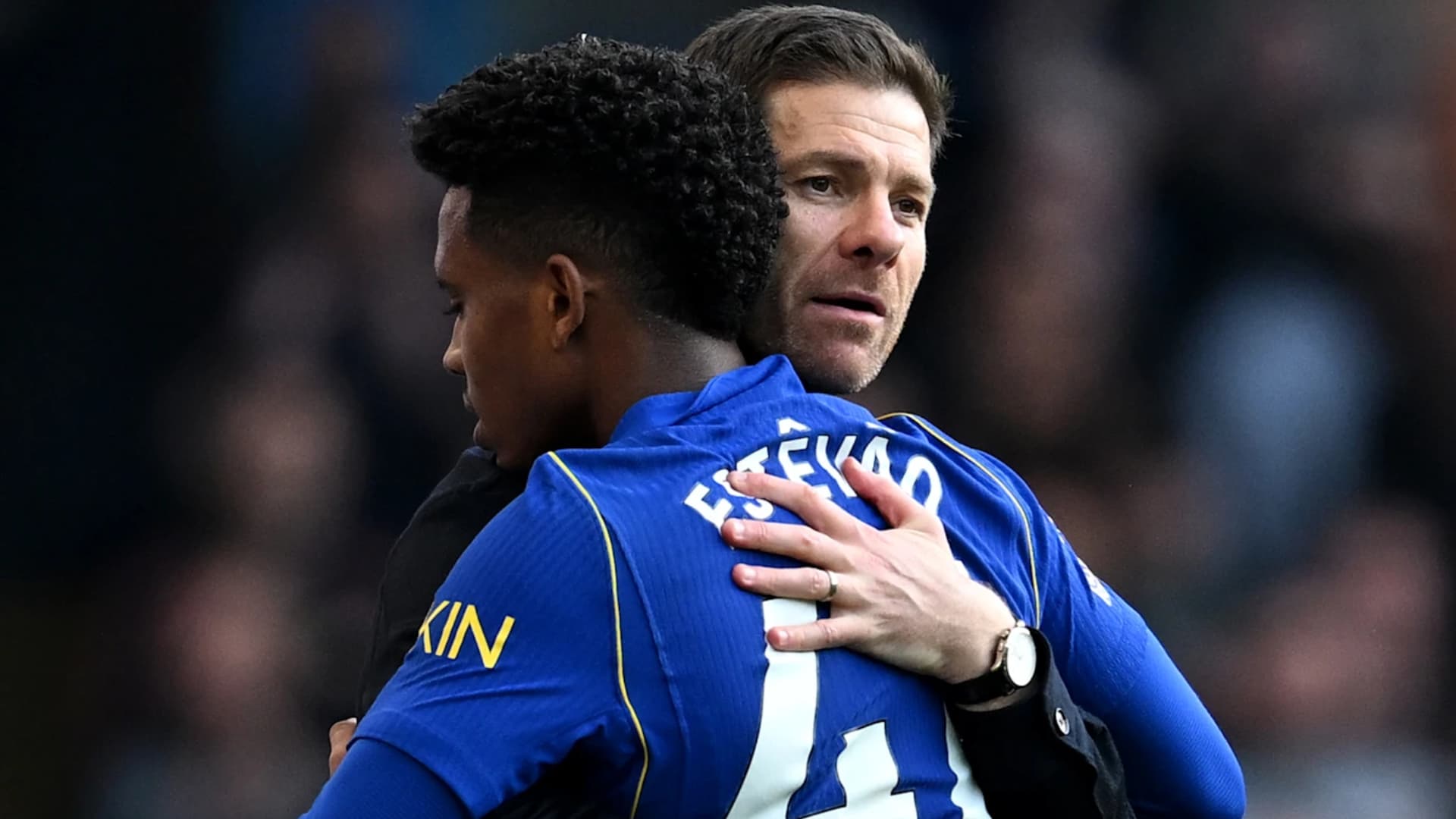
When Chelsea secured the signing of Estevao Willian from Palmeiras in 2025, expectations were sky-high.
Considered one of the most gifted teenagers in world football, the 19-year-old introduced himself to European fans with a breathtaking solo goal against Barcelona in the Champions League just 11 months ago.
Yet under new manager Xabi Alonso, Estevao has found himself sitting on the sidelines far more than on the pitch. Despite Alonso repeatedly reassuring reporters that the teenager has a massive part to play, his actual playing time tells a completely different story.
Although he made his first start against Manchester United in a 4-2-3-1 set up on the right wing during their 2-0 win, he had had played only 172 minutes this season prior to Saturday’s game and was left on the bench during the Carabao Cup exit to Liverpool.
Estevao was simply brilliant against Man Utd and he was a constant threat on the right wing. His six shots against Michael Carrick's side (three on target) was the most a Chelsea player has attempted in a game this season, while the former Palmeiras man also attempted eight crosses. Things could have been even better against United but he was denied a first goal of the campaign in the second half by a fractional offside call.
So why is Chelsea’s priced Brazilian talent, who Brazilian football expert Tim Vickery has dubbed "the best talent Brazil have produced since Neymar" struggling to get on the pitch otherwise?
Read More: Chelsea fans ‘confused’ by Xabi Alonso’s handling of attacker following Liverpool loss
The bizarre playing time stats
To understand how little Estevao is playing, you only have to look at the numbers.
Before Man United, Estevao had started just two competitive games under Alonso, both coming in the Carabao Cup against Luton Town and Leeds United.
In the Premier League, he had come off the bench six times for a total of just 47 minutes. That averages out to under eight minutes a game.
During the recent international break, Estevao played 172 minutes across three games for the senior Brazil national team. It is rare to see a player feature far more for their country than their club.
The frustration boiled over during Chelsea's recent Carabao Cup exit to Liverpool. Even with the game locked at 1-1 and heading to a penalty shootout, Estevao remained an unused substitute while traveling fans chanted his name from the away end. But why exactly is that?
Read More: Joao Pedro: The ‘Quiet Fighter’ Ready to End Chelsea’s Number 9 Curse
1. Fierce competition in Chelsea's frontline
The biggest obstacle in Estevao's way is the sparkling form of Chelsea's starting attackers.
Alonso has relied heavily on an attacking group of Joao Pedro, Cole Palmer, and Morgan Rogers, who scored 14 goals and provided 10 assists between them in Chelsea's opening 11 matches.
Furthermore, Pedro Neto operates primarily on the right wing where Estevao likes to play. Neto is trusted by Alonso to do heavy defensive work while still delivering in the final third, making him very difficult to drop.
Read More: Sulayman Salahudeen’s top 10 Chelsea players in history
2. Tactical intensity and recovering from injury
Alonso has also pointed to physical factors when explaining why he is being patient.
Estevao suffered a serious hamstring injury toward the end of last season that forced him to miss the World Cup. Although he completed most of pre-season, Alonso believes the teenager is still building up to the intense physical demands of English football after recovering.
When asked after the Liverpool match why he did not bring Estevao on for the penalty shootout or late in the game, Alonso explained that forced substitutions for player cramps (Malo Gusto) and knock issues (Moises Caicedo) disrupted his plans.
He added that throwing a player straight from the bench into a high-intensity finish was a risk he chose to avoid.
3. Limited competitions to build momentum
Unlike last season, Chelsea are not competing in European tournaments, and they are now out of the Carabao Cup. With the FA Cup not starting for Chelsea until January, there are simply fewer games available to rotate the squad.
Unless injuries or suspensions hit starting players like Pedro, Palmer, or Neto, Estevao will have to make the absolute most of short substitute appearances.
Key lessons young players can gain from Estevao’s situation at Chelsea
Patience During System Integration: Elite managers often prioritise physical readiness and defensive work rate over raw flair when integrating young international stars into intense leagues like the Premier League.
National Team Form vs. Club Hierarchy: Performing for your national team does not guarantee automatic starting spots at top clubs where starting combinations are already scoring and winning.
Taking Advantage of Squad Rotation: When domestic cup competitions are eliminated, young squad members must maximise every minute off the bench to prove they can alter high-pressure games.