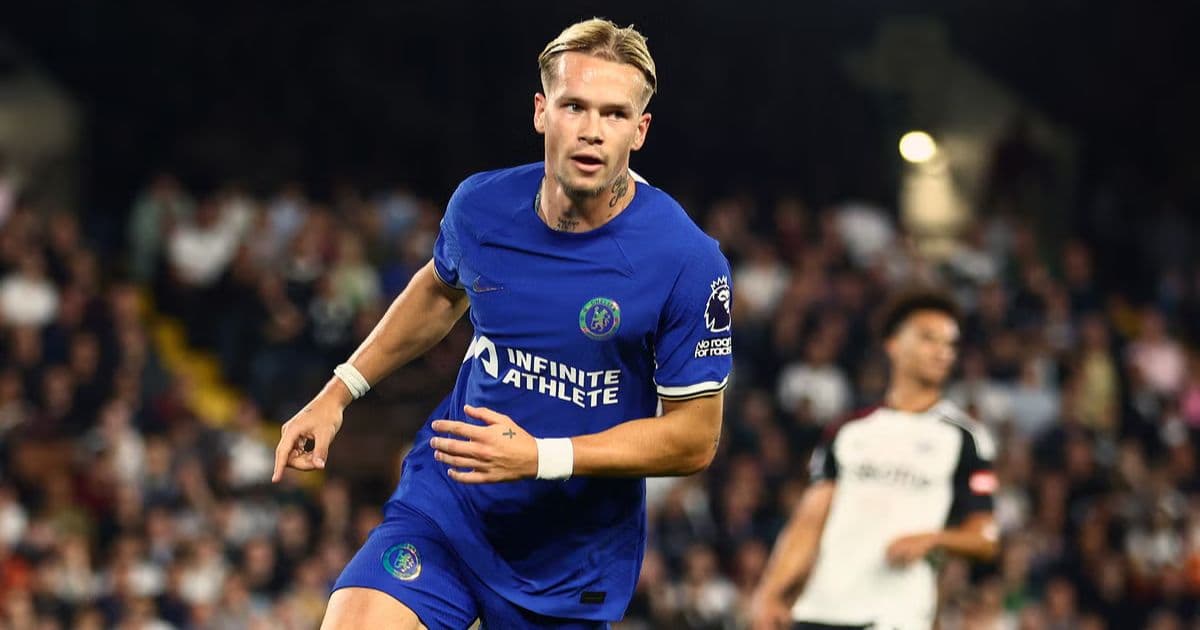
Mykhailo Mudryk can play football again, effective immediately, after the Football Association confirmed on Friday that his doping case has been resolved. The Chelsea winger has not played for the club since November 2024, when he was provisionally suspended after testing positive for meldonium.
The resulting four-year ban appeared to put his career in England in serious doubt. According to Fabrizio Romano, Mudryk is expected to join Chelsea's squad in Hong Kong ahead of Wednesday's pre-season meeting with Juventus.
Unless plans change at the last minute, Xabi Alonso will be able to call on the winger immediately. The decision finally closes a case that has hung over both Mudryk and Chelsea for almost two years. When Mudryk was first suspended.
The expectation was that his career in England might already be over.
Why The FA And WADA Resolved Mudryk's Doping Case
The FA explained exactly why the case was dropped. Since Mudryk's positive test in 2024, the World Anti-Doping Agency has changed how it reports low-level meldonium findings, and under those new rules, his sample would no longer count as a doping violation.
"If Mr Mudryk's sample was collected today, the concentration of meldonium in the sample would not have been reported, and no anti-doping rule violations would have resulted," the body explained.
Mudryk did not prove that his sample was contaminated, nor did he argue his way out of the charge on appeal. WADA just happened to lower the threshold at which trace-level meldonium counts as a violation.
And his 2024 result now falls below that new threshold. According to Sky Sports, Mudryk would not have faced a charge if the same sample had been taken under the current rules. That change is why the case was settled on appeal.
Instead of proceeding to a full disciplinary hearing. Chelsea moved quickly to welcome him back. The club said it had "supported Misha" throughout and that attention now turns to reintegrating him into Xabi Alonso's squad.
Xabi Alonso took over as Chelsea manager this summer and has spent pre-season working with a settled touring squad. Mudryk's arrival midway through the trip is unusual, but the club had expected this outcome for several weeks.
Chelsea have already played two matches in Sydney. Games against Juventus in Hong Kong, AC Milan in Jakarta and Johor Darul Ta'zim in Malaysia still remain before the Premier League season starts away at Fulham on 24 August.
Ukraine's football federation has not confirmed a call-up for Mudryk yet, but he is expected to return to international selection now that his club career has resumed.
How The Doping Case Kept Mudryk Out For Nearly Two Years
Meldonium, the substance behind Mudryk's positive test, is a heart medication that the World Anti-Doping Agency added to its prohibited list in 2016 because of its potential to enhance athletic performance.
Mudryk denied knowingly taking anything prohibited, saying the result "came as a complete shock." The FA charged him under Regulations 3 and 4 of its Anti-Doping Regulations, formally opening the disciplinary case that would keep him out for the next 20 months.
He lost his place in the matchday squad and, symbolically, his No.10 shirt, which was passed to Cole Palmer while the case dragged on. His final appearance came in the Conference League against Heidenheim.
Chelsea won 2-0, and Mudryk scored. Unable to train with teammates or play any organised football, Mudryk continued working individually to maintain his fitness, and he occasionally posted videos of his workouts.
He hired the same legal team that represented Paul Pogba, whose own four-year doping ban was cut to 18 months on appeal to the Court of Arbitration for Sport.
The club publicly backed Mudryk throughout, saying the squad believed in his innocence and expected him back once the process concluded. Mudryk turns 26 in January after missing most of the past two seasons.
What Young Footballers Can Learn From Mudryk's Case
Mudryk's case is a reminder of how little control an athlete has once a test comes back positive. He said the result came as a shock, and nothing in the FA's resolution disputes that account.
Even so, his explanation did not prevent the FA from bringing a charge under the anti-doping regulations that were in force at the time. Specialist legal advice appears to have played a role in the outcome.
Mudryk's representatives, the same firm that worked on Pogba's case, pursued an appeal that stayed open long enough for WADA's own reporting thresholds to change in his favour. That distinction matters for how the story is understood.
An adverse finding did not, in the end, cost Mudryk his career, but the process that got him back on a matchday squad took two years and depended on a rule change outside his control.
Younger players facing similar charges won't necessarily see the same outcome. Whether a case resolves this way depends on the specific substance, the concentration involved, and how anti-doping regulations happen to be written at the time.