The FIFA U-15 World Cup and Festival is a new international youth football competition designed to give young players from around the world greater access to international football.
Developed under the leadership of FIFA President Gianni Infantino and FIFA Chief of Global Football Development Arsene Wenger, the tournament takes a different approach to traditional international youth competitions.
Rather than focusing solely on results, the tournament combines international competition with youth development and cultural exchange, reflecting FIFA's ambition to give every talent a chance.
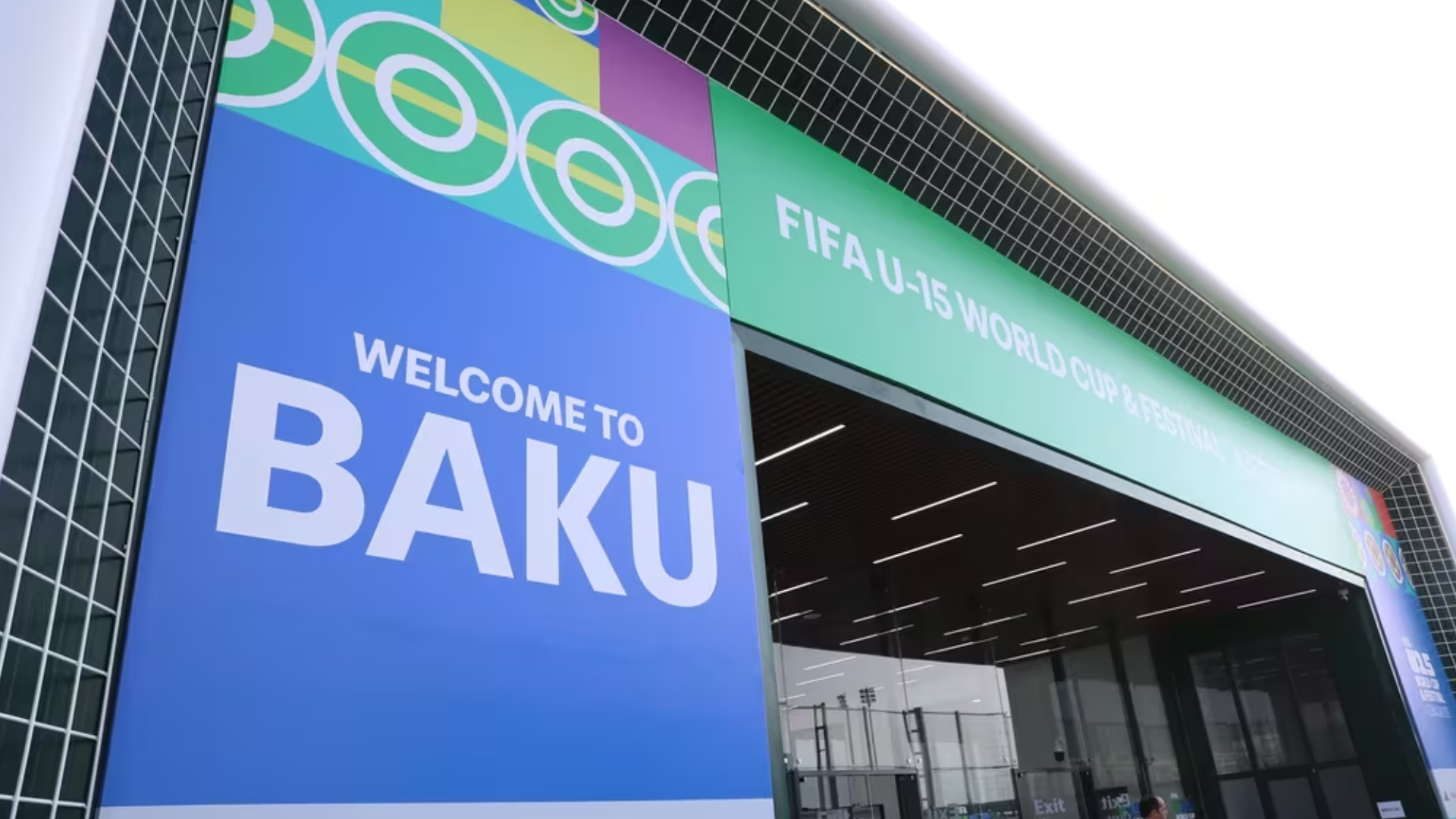
The inaugural boys' FIFA U-15 World Cup and Festival took place in Baku, Azerbaijan, from 24 to 30 October 2026.
FIFA is aiming to address systemic inequalities in youth football infrastructure across different continents and provide top-tier competition to developing football nations. Striver.Football brings you up to speed with what the tournament actually is.
Why the FIFA U-15 World Cup gives every team a chance
Traditional international competitions rely heavily on qualification rounds that often eliminate smaller or less-resourced nations before a global tournament even begins.
The FIFA U-15 World Cup and Festival is open to all 211 FIFA Member Associations, regardless of their size or footballing tradition. For the inaugural edition in Baku, 189 Member Associations confirmed their participation.
Crucially, the tournament operates on a non-elimination model. No participating team is sent home early regardless of their performance in the opening days.
Every delegation remains on site for the full duration of the festival, ensuring that young players receive maximum exposure to international tactics, diverse playing styles, and high-intensity match situations.
To bring teams from across the world together, FIFA has created a centralised tournament environment in Baku, with all participating teams accommodated in the same Athletes’ Village.
Read More: Arsene Wenger and Hristo Stoichkov back FIFA’s inaugural U-15 World Cup
FIFA U-15 World Cup Format: Groups, six tiers and 950 matches
Executing a tournament of this magnitude requires extraordinary logistics. The primary competition takes place at the multi-pitch Hovsan Competition Complex, which hosts dozens of simultaneous fixtures, while the final showcase matches are held at the Baku Crystal Hall.
Over three thousand young athletes participate across the week, competing in nearly one thousand total matches scheduled in ten daily kickoff windows.
The tournament is structured into two distinct phases to ensure balanced competition. During the initial Qualification Stage, the field of teams is drawn into thirty-two large groups to complete a rapid round-robin schedule.
Rather than sending lower-ranked teams home, the final standings from this stage are used to sort the field into six distinct performance tiers.
In the second phase, teams compete within one of six performance tiers, with the qualification-stage results determining their placement and every team continuing to play through to the final day.
“Each team is scheduled to play four to five matches in the qualification stage and a further four to five in the tournament stage, guaranteeing at least nine matches and ensuring that every team remains involved until the final day. While a champion is crowned at the top of each individual tier, the winner of Tier 1 earns the official title of tournament champion.
FIFA U-15 World Cup rules: 8v8 matches, kick-ins and offside
Because 14 and 15-year-old athletes are in critical stages of physical growth, FIFA implemented specialized rule modifications designed to reduce injury risk and maximize technical development.
Each squad can include 14 players, with eligibility restricted to players born in 2011 or 2012. Matches are played in an eight-versus-eight format on scaled-down pitches measuring sixty-eight meters long by forty-seven meters wide, using standard full-size goals.
Fixtures consist of two twenty-minute halves, providing forty minutes of action per game to maintain intensity without overtaxing physical stamina.
To ensure every athlete gets substantial time on the pitch, coaches are granted unlimited rolling substitutions.
To encourage fluid play, throw-ins are replaced by kick-ins, while offside decisions apply only beyond a specially marked line positioned 14 metres from the goal line.
What comes next for the FIFA U-15 World Cup and festival?
The event in Baku marks the beginning of a permanent addition to the international football calendar.
The inaugural boys' edition will be followed by a girls' U-15 World Cup and Festival in 2027, with FIFA planning to invite Member Associations to enter both boys' and girls' teams in separate annual tournaments from 2028 onwards.
Moving forward, FIFA will host separate annual boys' and girls' U-15 tournaments, establishing a continuous pipeline for youth talent across the globe.