
There is a distinct kind of pressure that builds through an opposing backline when Brighton & Hove Albion press in numbers.
Mikel Arteta’s reigning champions found out the hard way at the Amex Stadium, struggled to build through Brighton's press during a dominant performance from Fabian Hürzeler's side.
The performance highlighted why Brighton's pressing approach is becoming increasingly difficult for opponents to handle.
Driven by an aggressive philosophy that bridges intense athletic output with absolute positional trust, the Seagulls have developed a defensive structure designed to disrupt opponents who build from the back.
The Numbers Behind Brighton's Pressing
The underlying data compiled by Opta underscores just how suffocating Hurzeler's tactical machine has become in the early weeks of the 2026-27 campaign:
7.8 Passes Per Defensive Action (PPDA): One of the strongest pressing figures in the Premier League.
47.4 Meters: Maintaining the highest average defensive line in the league, shrinking space and cutting off passing corridors at the source.
35 Final-Third Regains: Leading the Premier League by an 8-regain margin over next-best Everton, directly generating 8 shots for (good for 7th overall).
16 Goals Scored: The highest attacking output in the opening five matches of a Premier League season since Manchester City's 19-goal blitz in 2022-23, powered by an expected goals (xG) mark of 11.6.
How Brighton's Pressing Dismantled Arsenal
As The Athletic observed, Brighton's performance against Arsenal relied heavily on collective synchronisation.
"The key was that when one player went into a duel, he always had the feeling that his team-mate was behind him," Hurzeler explained after the game.
1. Suffocating the First Phase
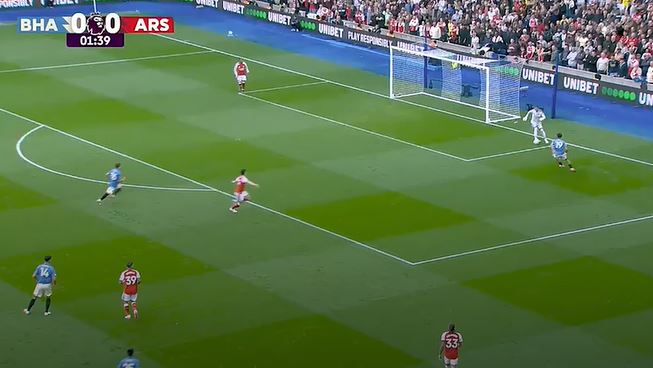
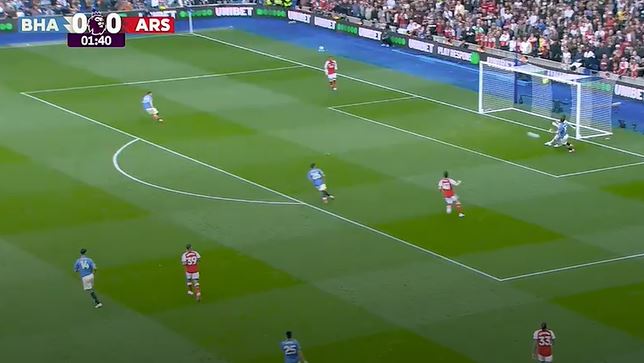
Brighton refused to let Arsenal breathe from goal kicks, locking on man-to-man right up to goalkeeper David Raya.
That structure forced immediate errors, with Raya failing to find a team-mate with three of his first seven passes.
2. The Art of 'Backwards Defending'
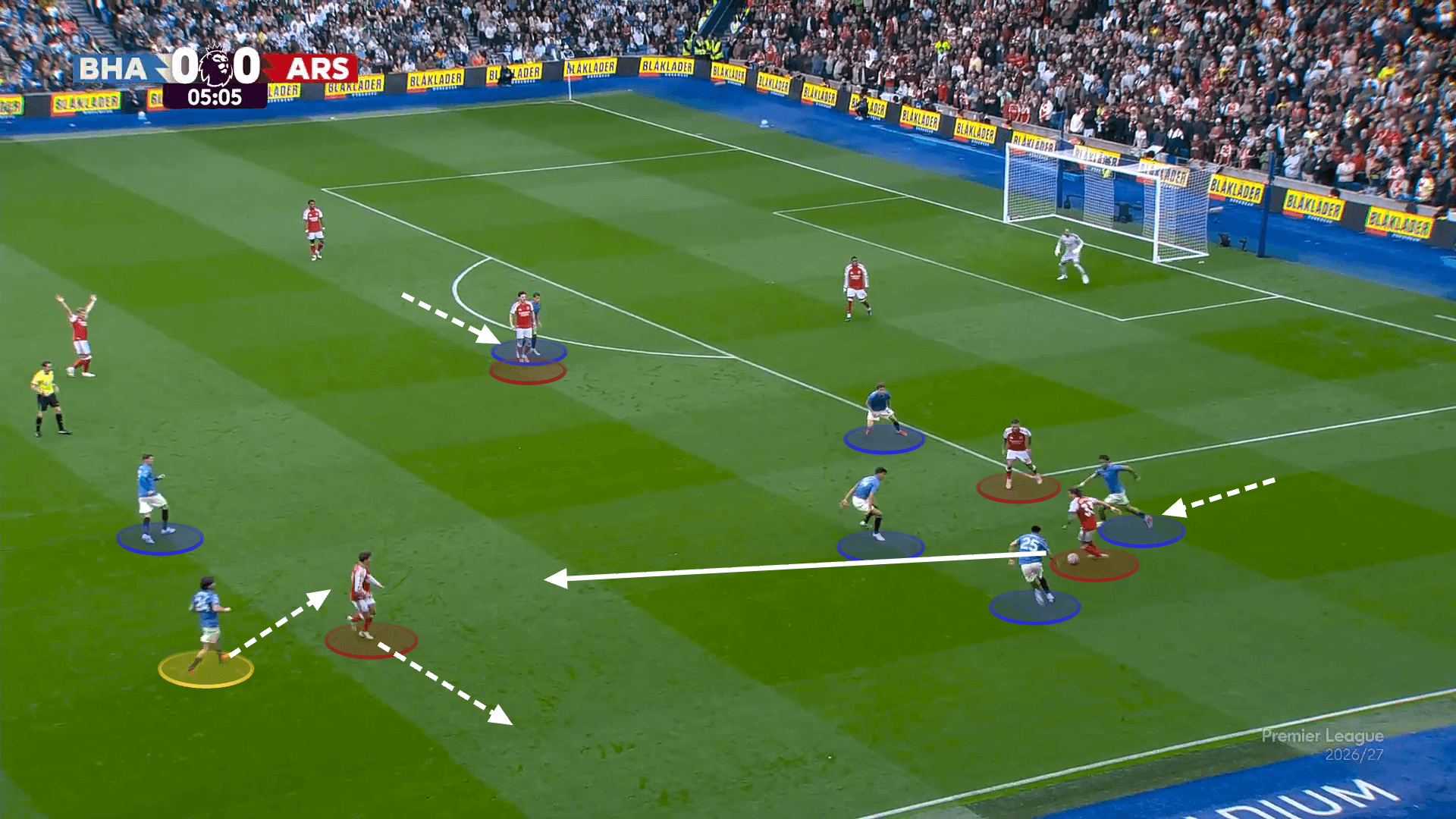
A defining feature of Hürzeler's system is what he describes as "backwards defending" where frontline players track back furiously to apply pressure from behind once a pass bypasses them.
When striker Charalampos Kostoulas executed this against Arsenal, it helped create a 4-v-2 situation that forced Riccardo Calafiori into a difficult pass intercepted by Ferdi Kadioglu.
3. Power, Height, and Tactical Fluidity
Recruitment has supercharged this approach. Summer additions Luka Vuskovic and Pascal Struijk added physical presence to the backline, winning 19 of 35 aerial duels.
Meanwhile, players such as Diego Gomez and Chema Andres provided the running power needed to sustain Brighton's pressure.
Read More: How Brighton Built One of the Premier League’s Smartest Recruitment Models
What Coaches and Young Players Can Learn From Brighton's Pressing
For youth academies, tactical directors, and aspiring coaches dissecting Brighton's hot start, several critical developmental takeaways stand out:
Synchronised Pressing Triggers: An effective high press relies on collective triggers — such as a back-pass to a centre-back — to turn a medium block into coordinated pressure.
The Necessity of Recovery Running: Forwards cannot simply switch off when the initial press is bypassed; recovering from behind can deny opponents an easy route out.
Repurposing Versatile Profiles: Developing versatile profiles, such as players capable of moving between attacking and wide defensive roles, can help teams maintain pressing intensity without sacrificing structure.