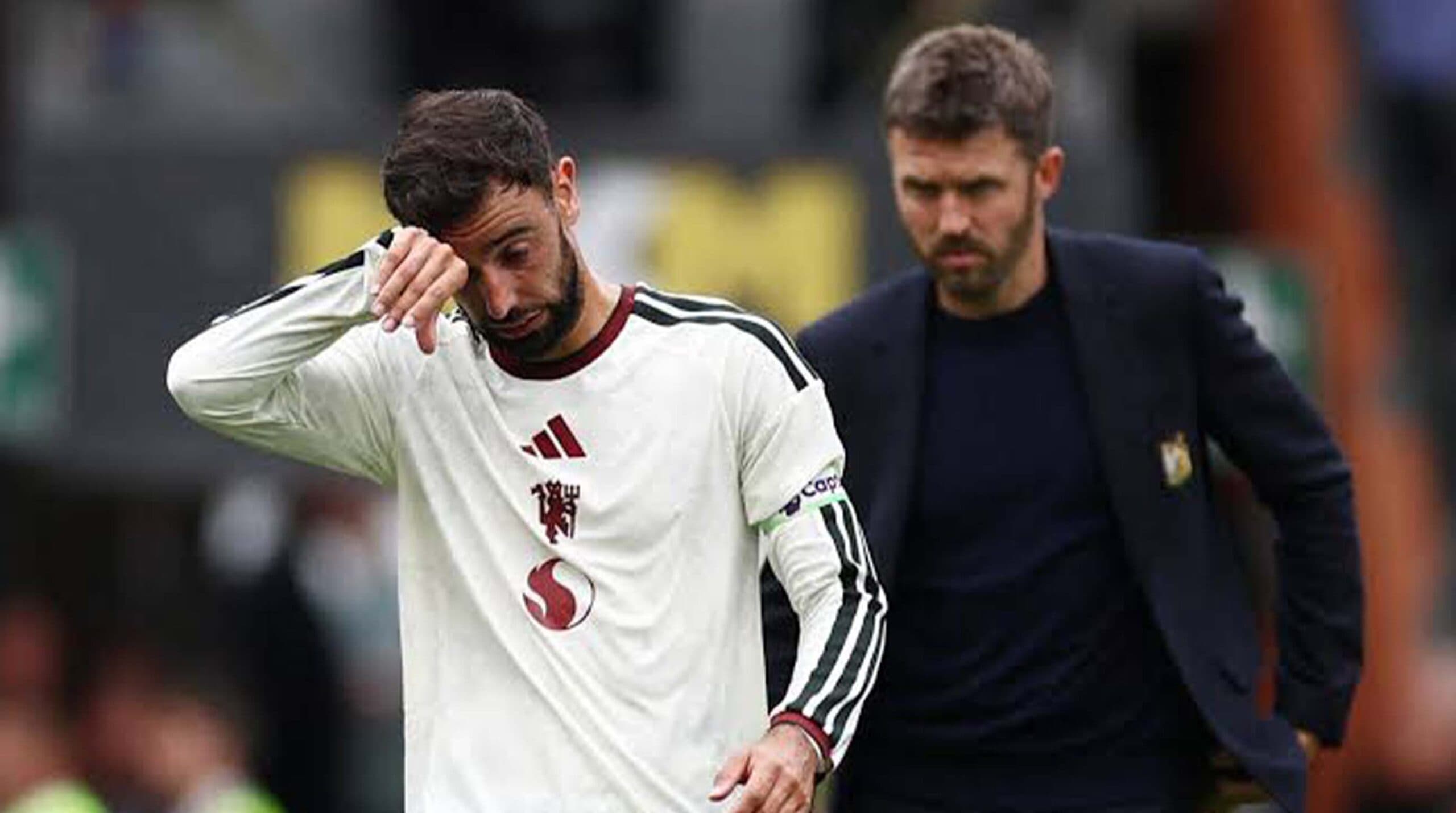
After Cesc Fabregas’ Como defeated Manchester United 4-1 in their Champions League encounter yesterday, Michael Carrick strode across the turf with raised hands, offering an apology to the few dozen traveling fans who had endured a lifeless, thoroughly unravelling display.
It was a gloomy picture to witness on the night, and drew parallels to Ole Gunnar Solskjær’s last game in charge of the club against Watford back in 2021 before he was dismissed after a series of poor displays this term.
United should have conceded more. Such was their appalling display. Fabregas even admitted post-match that he instructed his Como side to stop running late on to preserve energy for their next league match.
While it might be looking untenable for Carrick, who signed a two-year deal last May to extend his spell as manager, making dugout changes for a third time in three mid-season cycles will solve nothing unless United address the five systemic, deeply rooted flaws undermining the club.
Striver.Football attempts to analyse the issues affecting the club and what needs to give.
5. Public disagreements and questions over accountability
The most alarming moment of United's trip to Lombardy occurred in front of the television cameras.
Minutes after being substituted in the 67th minute, club captain Bruno Fernandes went on TNT Sports to publicly attribute United’s passive performance to a tactical directive from the coaching staff not to press man-to-man.
"We actually were half-pressed man-to-man in the second half and then conceded a goal from that... And there’s a little bit on whatever system you play, whatever tactics you play, if you don’t run, and you don’t run forward, and you don’t run back, you ain’t going to win." Carrick, responding to Bruno Fernandes said.
This exchange came just a week after Lisandro Martinez publicly criticised summer recruitment under Technical Director Jason Wilcox following the 2-0 defeat to Atletico Madrid.
When senior squad leaders routinely use post-match interviews to throw coaching and executive decisions under the bus, it reveals a complete breakdown of internal discipline.
4. Manchester United’s pressing and intensity problems
Carrick’s observation that players simply "didn't run" exposes a chronic defect that has plagued United all season.
For months, backroom tracking metrics have placed United near the bottom of European football for high-intensity work rates and physical output—a metric Carrick previously brushed aside, but can no longer ignore.
This physical deficit could be driven by an unholy combination of factors. According to The Athletic, the club might not have had a good pre-season. Flawed physical preparation left players unable to sustain 90-minute pressing sequences.
Furthermore, the quality of players they signed, especially Youri Tielemans and Andrey Santos exposed a lack of enough athleticism without the ball.
According to Opta, United are 11th and 14th in the Premier League and Champions League respectively for Passes Per Defensive Action (PPDA), a metric used to measure the number of passes a team allows an opposition team before attempting to win the ball back.
Carlos Baleba was the only athletic profile they signed, and even then, he might need time to get up to full speed after being signed while injured.
For a club built on the relentless intensity of Sir Alex Ferguson’s great sides, hearing Fabregas admit he called off the dogs to spare United further punishment is an unbearable reality.
3. Recurring injuries and squad availability
History is once again repeating itself at Carrington. Eight first-team regulars missed the Como fixture through injury or illness, forcing Carrick to populate his substitutes bench with unproven academy players.
This medical crisis is not an isolated incident. Similar casualty rates crippled the squad during the final weeks of Ruben Amorim’s reign, the close of Erik ten Hag’s 2023-24 season, and Ralf Rangnick’s interim spell.
When a squad repeatedly loses its core starting XI to soft-tissue injuries, the manager is deprived of tactical continuity, explaining why Carrick’s record has plummeted from 39 points in his first 17 games to just two wins in his last 11.
2. Executive instability and a lack of clear direction
Sir Jim Ratcliffe and INEOS entered Old Trafford promising an overarching "game model" that would define United's identity. Yet, their executive appointments and decision-making raise troubling questions.
The decision to hire Omar Berrada and Jason Wilcox in an attempt to replicate Manchester City’s operational model has yet to yield tactical cohesion. Furthermore, the decision to fire Sporting Director Dan Ashworth after just six months in the role hints at an executive suite operating without clear long-term strategy.
Transitioning from Ten Hag to Amorim to Carrick without an established blueprint has left United with a mismatched squad assembled across three radically different tactical philosophies.
1. Ownership, recruitment and Manchester United’s long-term decline
While Carrick is taking the heat for on-field results, the culture created at Old Trafford remains deeply compromised.
Twenty-one years of Glazer family control—draining over £1 billion out of the club in financing costs—have allowed the sporting infrastructure to rot from within.
Ratcliffe’s minority stake was supposed to install elite sporting governance, yet his hands-on management style at Carrington has raised eyebrows.
Former manager Erik ten Hag recently spoke of a "toxic culture" that went unchecked by leadership.
Until the ownership and executive fix the recruitment policy, medical infrastructure, and cultural accountability, installing a new manager will simply restart the same cycle.