
When Aston Villa walked away with all three points against Tottenham at the Tottenham Hotspur Stadium last Saturday, capitalising on familiar wastefulness in front of goal and defensive fragility—it marked yet another chapter in a deeply alarming trend.
For all the lavish summer spending and grand ambitions of pushing into the European tier, Spurs find themselves languishing at the bottom of the table as domestic action pauses for the international break.
But the root of their ongoing problems can be traced to their home form that has paradoxically become their greatest enemy.
Striver.Football examines the numbers and systemic problems Roberto De Zerbi must solve.
Why Tottenham Have the Premier League's Worst Home Record
The statistics outlining Tottenham's home struggles since the 2024/25 campaign read like a horror story for supporters. Compare Spurs to any side ever-present in the top flight during that window, and the ledger is damning as originally reported by The Athletic.
In the last two seasons, Tottenham have recorded just nine victories in front of their own fans and have accumulated 37 points on home turf.
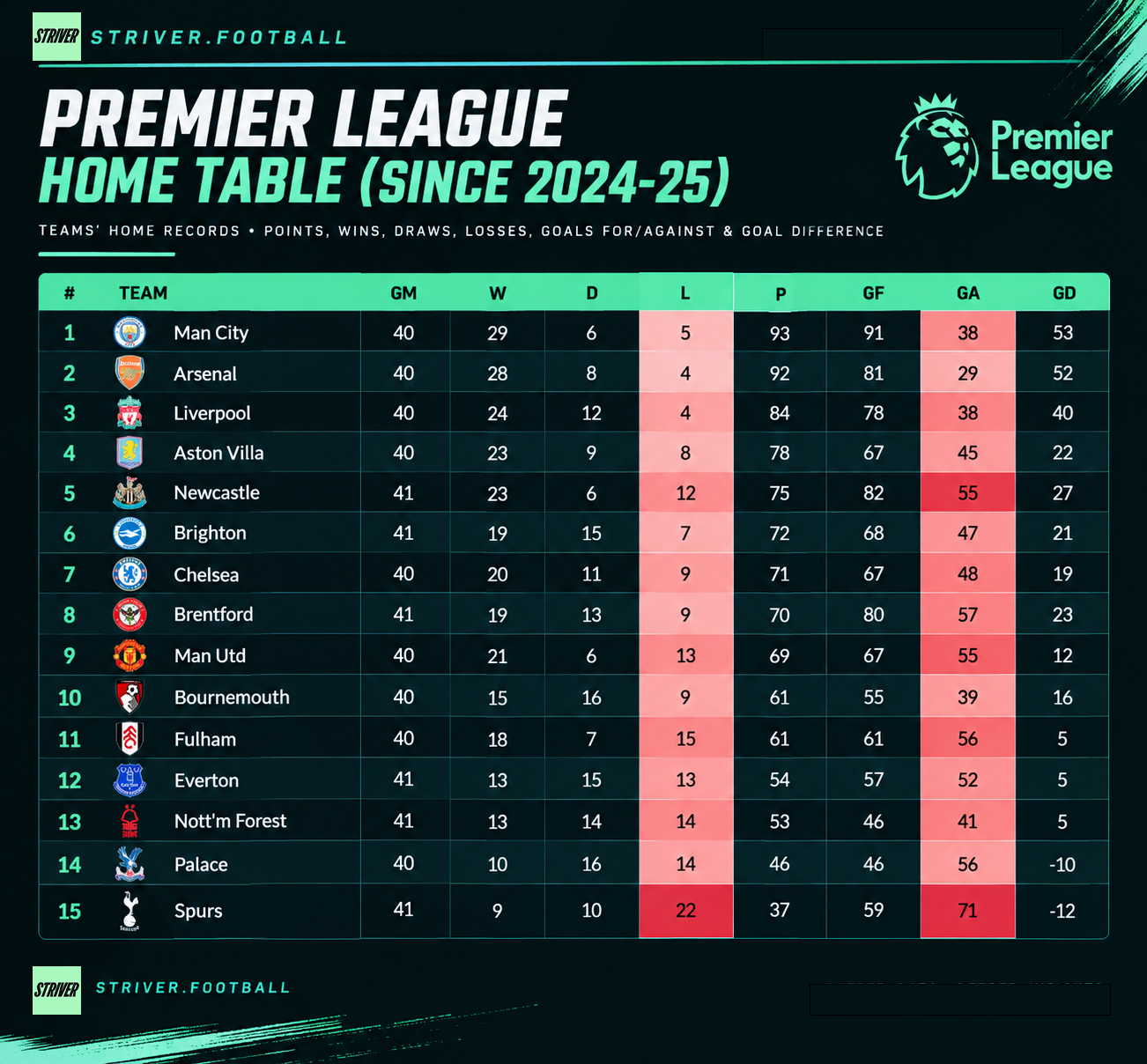
During that period, they have recorded 22 home losses, more than any other club in the division. They have conceded 71 goals, resulting in a league-worst home goal difference of -12 alongside a negative expected goal (xG) differential.
These numbers highlight a prolonged problem spanning multiple managerial regimes, having swapped Ange Postecoglou’s high-line ambition for Thomas Frank’s pragmatism and back to expansive football over De Zerbi, while enduring endless squad overhauls.
Why Tottenham Struggle When They Concede First at Home
Perhaps more damning than the raw defeat count is how games unfold in north London. Since 2022-23, Spurs have fallen behind in a staggering 52 out of 79 home league matches, the worst rate in the entire division.
When opponents score first, Tottenham have repeatedly struggled to recover. Out of those 52 matches where they conceded the opener, Spurs have managed to salvage victory just 12 times, losing 34.
Whether facing traditional 'Big Six' rivals or relegation battlers who have increasingly found trips to N17 rewarding, Tottenham routinely project an aura of vulnerability that invites pressure.
What Roberto De Zerbi Must Fix During the International Break
De Zerbi was brought in to instill a bold, possession-dominant identity, but the structural imbalances remain glaring.
Opponents routinely carve through open spaces, outrun a fragile midfield, and punish every unforced error.
When domestic play resumes, the margin for error narrows immediately. De Zerbi cannot afford to return from the international break with the same defensive naivety.
If he fails to make Tottenham more resilient and difficult to beat at home, what was supposed to be an exciting new era under the Italian manager risks spiraling into an unmitigated relegation scrap.