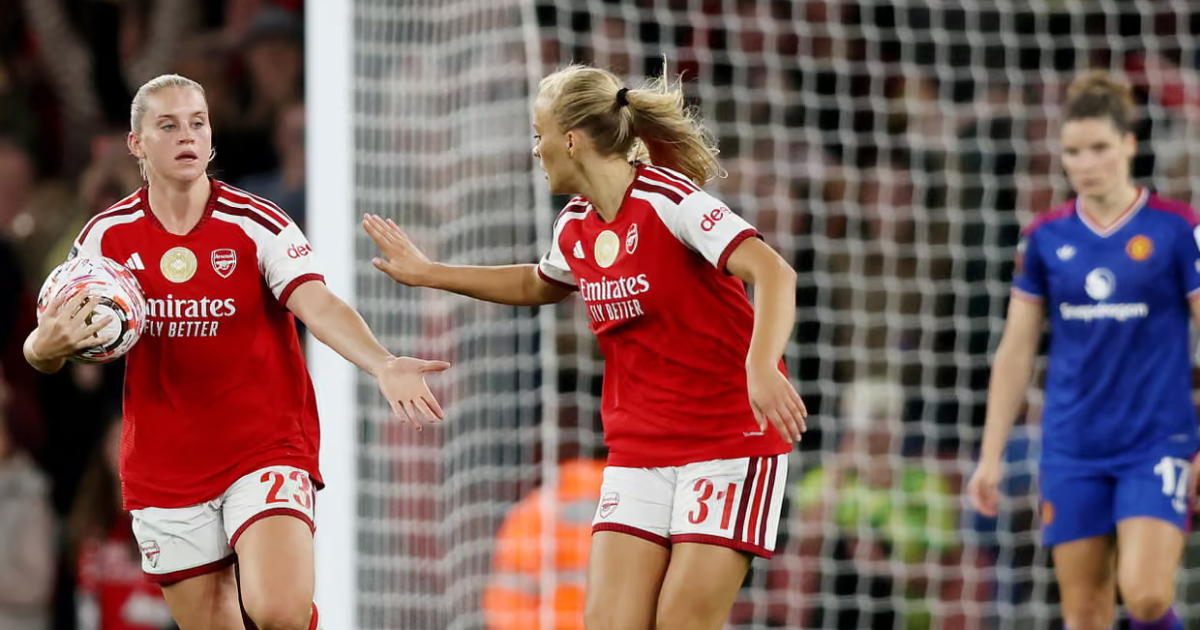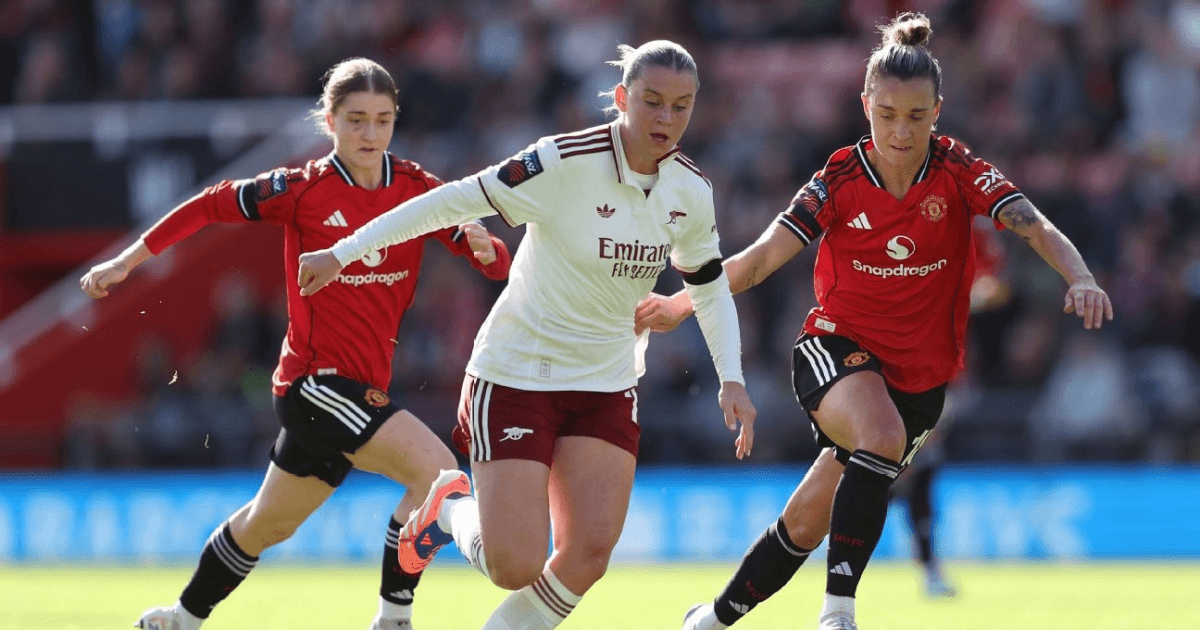
The Women’s Super League is attracting more elite international talent than ever, but with fewer homegrown players starting regularly, is the league’s growth creating a problem for England’s future?
The Women’s Super League has never been more global.
Players from across Europe, Asia, North America and beyond are increasingly choosing England as their destination, while clubs are spending more money to attract some of the biggest names in the women’s game.
Alexia Putellas’ move from Barcelona to London City Lionesses this summer is perhaps the clearest example of how far the league has come.
But alongside that growth comes an increasingly important question: what does the internationalisation of the WSL mean for homegrown players?
The issue has become particularly noticeable at the beginning of the 2026/27 campaign, with several clubs fielding starting XIs containing few or no English players.
For a league that is increasingly viewed as one of the best in the world, that presents an interesting balancing act between attracting elite talent and creating opportunities for the next generation.
Why Is the WSL Becoming More Global?
The transformation of the English top flight has been significant.
When Manchester City won the WSL title in 2016, they did so with a predominantly British starting XI.
The landscape is very different today.
Since the league became fully professional in 2018, investment, attendances, broadcasting exposure and commercial interest have all grown.
That has allowed clubs to expand their recruitment networks and compete for players from around the world.
Recent transfer windows have seen WSL clubs recruit heavily from countries including Germany, Sweden, Japan and Australia.
London City Lionesses have taken that approach particularly far, bringing in some of the biggest names available, including two-time Ballon d’Or winner Putellas.
For the league itself, attracting players of that calibre is a sign of its growing status.
But the increased competition for places inevitably makes the pathway from academy football to the WSL first team more difficult.
Are WSL Homegrown Players Getting Fewer Opportunities?
Data highlighted by BBC Sport shows that the proportion of homegrown players — defined as English, Scottish, Welsh or Northern Irish players — starting 11 or more WSL matches has fallen steadily over the past three seasons, dropping to below a third.
There has been an increase during the opening weeks of the 2026/27 campaign, although the WSL’s expansion from 12 to 14 clubs has played a part.
Newly promoted Birmingham City, Crystal Palace and Charlton Athletic have all brought additional opportunities for homegrown players, meaning the league now has a larger pool of players and starting places.
However, the wider trend remains notable.
The decline is not being replicated to the same extent across some of Europe's other major women's leagues.
During the 2025/26 season, BBC Sport reported that 61% of players who started at least half of the matches in France's Premiere Ligue were French.
That figure was 63% in Germany's Frauen-Bundesliga and 69% in Spain's Liga F for players from those respective countries.
The comparison raises an important question for English football: is the WSL creating enough opportunities for its own young players to develop at the highest level?
Why Do WSL Managers Face a Homegrown Player Dilemma?
There is an obvious tension between developing young players and selecting the strongest possible team.
Manchester City manager Andree Jeglertz acknowledged that clubs have a responsibility to develop their own talent, but also made clear that competitive results ultimately influence his team selection.
His argument is straightforward.
A manager is judged on results, and if an experienced international player gives their side a better chance of winning a match, there is little incentive to select a less experienced academy graduate simply because they are homegrown.
Birmingham City boss Amy Merricks has similarly recognised both sides of the issue.
The former Birmingham academy pathway has to compete with an increasingly international recruitment market, but the quality of players arriving from overseas is also part of what has helped the WSL become a destination for elite talent.
It is therefore not simply a case of clubs choosing foreign players over English ones.
The competition for places has become much stronger.
Read More: Are London City Lionesses good for women’s football? The debate around their rise
Read More: 5 Reasons Why The WSL Has Very Few African Players After WAFCON 2026 Exploits
What Does the WSL's Homegrown Player Trend Mean for England?
This is where the debate becomes particularly significant.
England are the reigning European champions, but their starting XI has remained relatively consistent across the last three major tournaments.
Five players who started the Euro 2025 final against Spain had also started the Euro 2022 final against Germany.
The England team that has achieved so much over the past five years was built around a generation of players who benefited from significant opportunities at club level when they were younger.
Lauren Hemp, Alessia Russo and Georgia Stanway, for example, were all part of the England Under-20 side that reached the 2018 FIFA Women's Under-20 World Cup semi-finals.
That generation helped form the foundations for England's subsequent success.
But the current pathway is facing questions.
England's Under-20 side were eliminated by Nigeria at the 16 of the 2026 FIFA Women's Under-20 World Cup, while England had also failed to qualify for the previous two editions in 2022 and 2024.
That does not automatically mean the WSL's increasing reliance on overseas players is responsible.
There are numerous factors involved in youth development and international performance.
However, the lack of regular senior opportunities for young homegrown players is becoming increasingly difficult to ignore.
How Does the WSL Homegrown Player Quota Work?
There are already rules designed to protect the pathway.
WSL clubs are required to have at least eight homegrown players registered in their squad list, while the rules for WSL2 clubs operate on a higher sliding scale depending on squad size.
But critics argue that squad-list requirements do not necessarily translate into meaningful first-team minutes.
A player can technically count towards a club's homegrown quota without regularly starting or even appearing in competitive matches.
Former England striker Ellen White has called for the existing quota to be reviewed, while other voices within women's football have suggested that a minimum number of homegrown players could be required on the pitch rather than simply in the squad.
That would represent a much bigger intervention and could significantly change how clubs build their teams.
Could Academy Teams Create a New Pathway for WSL Young Players?
The FA has already approved a major change that could provide another route for young players.
From the 2027/28 season, four Professional Game Academy sides will be given the opportunity to compete in Tier 3 of the FA Women's National League.
The FA says the move is designed to strengthen the women's football pyramid, raise standards and provide young players with more competitive opportunities.
Chelsea have already confirmed their intention to enter an academy side in the third tier, while Manchester City have also expressed interest.
The potential benefit is clear.
Rather than young players spending seasons predominantly in academy football, they could gain experience playing competitive senior football against older and more physically developed opponents.
For players who are not yet ready to break into a WSL first team, that could provide an important bridge between academy football and the professional game.
Can the WSL Balance Global Growth With Homegrown Development?
There is no simple answer.
The WSL attracting some of the world's best players is undoubtedly a sign of its progress.
The arrival of stars such as Putellas has raised the league's profile and increased the level of competition, while English clubs competing successfully in Europe also benefits the wider women's game.
But growth brings new challenges.
If young homegrown players struggle to get meaningful minutes as clubs increasingly recruit established international talent, the impact may not be felt immediately.
It could instead become apparent years down the line, when the current generation of academy players is expected to replace today's established England internationals.
The challenge for English football is therefore finding a balance.
The WSL needs to remain a destination for the world's best players while ensuring that its own academy system continues to produce players capable of competing at the highest level.
The success of the Lionesses has helped drive the growth of the domestic game.
The next challenge may be making sure that growth continues to create a pathway for the players who could eventually take England forward.