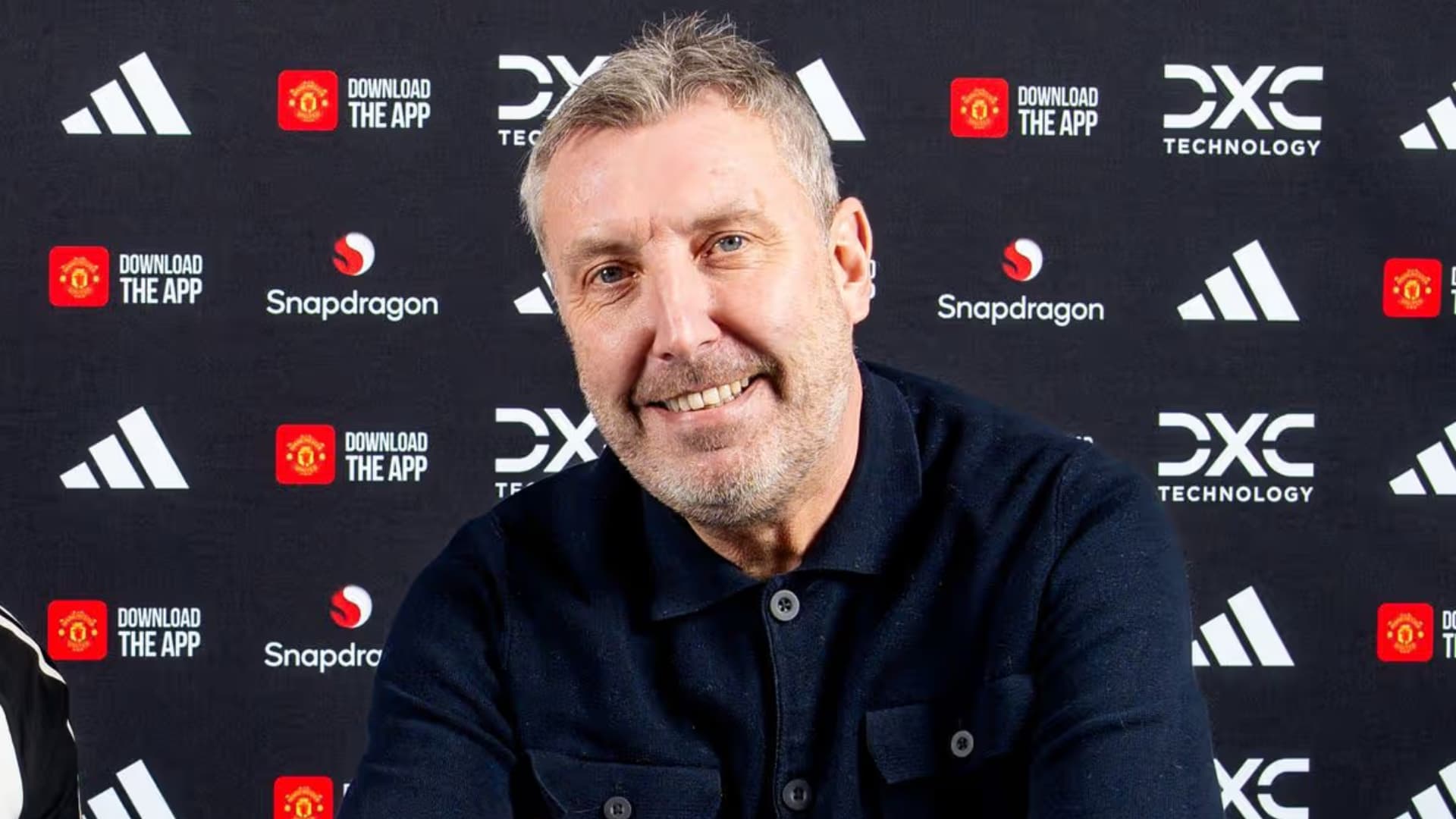
In recent weeks, the heat directed at Manchester United’s Director of Football Jason Wilcox has reached unprecedented levels.
Following a grueling start to the 2026/27 season, where United have won just one of their opening nine Premier League matches, Wilcox finds himself in the crosshairs of supporters, television pundits, and even his own dressing room.
Wilcox's position is under intense examination especially since Lisandro Martinez’s scathing remarks about his recruitment policy following a 2-0 loss to Atletico Madrid in the Champions League. He was also booed by the fans after another defeat to Chelsea a couple of weeks later.
Former United legend Peter Schmeichel even openly questioned whether someone with past ties to Manchester City and Leeds United should hold high-level decision-making power at Carrington on The Overlap
Yet, behind the media storm, Sir Jim Ratcliffe and INEOS continue to lean heavily on Wilcox’s eye for talent and operational style.
Striver.Football attempts to answer the looming questions behind Jason Wilcox and how he is running Manchester United’s football department amid escalating backlash.
Bootroom chemistry with Sir Jim Ratcliffe
Wilcox originally arrived at Old Trafford in April 2024 as Technical Director, intended to work beneath incoming Sporting Director Dan Ashworth.
However, when Ashworth departed just six months later following ideological clashes over tactical fits, such as appointing Ruben Amorim mid-season, Wilcox was quietly promoted to Director of Football.
Wilcox established a direct line to Sir Jim Ratcliffe. Ratcliffe’s preference for plain-spoken "bootroom talk" aligned naturally with Wilcox's straightforward communication as reported by The Athletic.
Ratcliffe openly declared that United lacked advanced data infrastructure upon arrival, stating: "All we've got is Jason's eyes... Txiki Begiristain, I know, thought Jason had the best eyes in the club [at Man City]".
Chief Executive Omar Berrada, who worked alongside Wilcox at City, pushed for his promotion, believing Wilcox could act as United's answer to Begiristain, an executive constantly on the grass at Carrington, taking the temperature of the squad and coaching staff.
Managerial Friction
Wilcox's foundational coaching philosophy leans toward possession-dominant head coaches who refuse to compromise on their principles, a trait he admired when hiring Russell Martin at Southampton. However, translating that preference to Manchester United has proven volatile:
According to The Athletic, Wilcox evaluated replacement candidates alongside Sir Dave Brailsford before the 2024 FA Cup final, but Ten Hag kept his job after winning the trophy.
Ten Hag later publicly criticised INEOS, claiming top football required a totally different approach than cycling or petrochemicals.
While Berrada and Ratcliffe drove Ruben Amorim’s appointment, Wilcox retained reservations over Amorim's rigid 3-4-3 system.
When results faltered, Wilcox pressed Amorim to adopt a back four. A heated row at Carrington in late December 2025 culminated in Amorim famously declaring: "I came here to be the manager, not the coach... the sporting director needs to do their job." Amorim was sacked the following day.
Wilcox is now at the center of crunch discussions alongside Ratcliffe, Berrada, and the Glazers regarding Michael Carrick’s future.
Facing the prospect of hiring a third manager in mid-season in three years, Wilcox is desperate to show patience, even as pressure mounts to consider alternatives like Eddie Howe.
Summer transfer window friction
The central driver of current fan and player frustration stems from United’s summer recruitment. Having spent two years out of the Champions League while planning a multi-billion-pound stadium redevelopment, United operated under strict financial constraints.
Following the 2-0 loss to Atletico, defender Lisandro Martínez voiced public frustration, stating he "expected more from the technical director".
The Athletic claims multiple dressing room figures share concerns over the squad's construction. Wilcox subsequently met with Martinez to outline the club's financial parameters.
Rather than blowing the majority of their transfer budget on a single elite target like Elliot Anderson, Wilcox and Director of Recruitment Christopher Vivell chose to spread £160m across three midfield additions, including Andrey Santos (£50m) and Carlos Baleba.
However, prioritising midfield depth, left Man United bare at left-back and center-forward. When Patrick Dorgu, Luke Shaw, and Noussair Mazraoui suffered injuries, United's lack of defensive cover was exposed.
Academy overhaul and JJ Gabriel’s conandrum
While senior football operations remain under heavy fire, Wilcox’s work in restructuring United’s academy has yielded aggressive improvements.
Drawing on his background running City's academy, Wilcox appointed Steve Torpey as Academy Director.
At the same time, United aggressively poached elite teenagers, securing Isaac Konde from Liverpool alongside David Eze and Karim Cassim from Manchester City.
However, despite saving Cole Palmer from release during his City days, Wilcox was unable to convince 16-year-old prodigy JJ Gabriel to stay at Carrington, a loss that could prove costly if the youngster fulfills his massive potential. Gabriel is currently being linked with moves to Bayern, PSG and even Real Madrid
Final thoughts
Jason Wilcox’s tenure as Manchester United’s Director of Football is undergoing a stress test. INEOS retains complete trust in his talent identification and operational discipline, but 1 win in 9 games leaves zero room for error.
Whether Wilcox can stabilise Carrington or be consumed by the Old Trafford pressure cookers will depend entirely on how United navigate the coming weeks.